





Martin Campbell explains how Meridian Trust’s 36 schools work together to offer enriching trips and residentials that build resilience, close the disadvantage gap and help teachers learn from seasoned colleagues.

Could you tell us about the Meridian Trust?

Meridian Trust is a multi-academy trust of 36 schools spanning Cambridgeshire, Lincolnshire, Bedfordshire and Northamptonshire. As a values-driven Trust we believe in extending the boundaries of learning to help ensure the students who leave the trust are confident individuals.
How are you establishing the value of Extending the Boundaries of Learning in practice?
Through working together, in both geographical hubs and as a whole Trust, we have developed a range of learning outside the classroom (LOtC) activities that all schools subscribe to and attend. These include immersive two-day events, whole trust activities, residentials and joint school trips. Working together to provide a rich curriculum for students helps to build resilience, motivation, skills and knowledge. Using the criteria of the LOtC Mark all schools can measure how effective their Extending the Boundaries of Learning curriculum offer is to students.
Can you tell us more about the hub model?
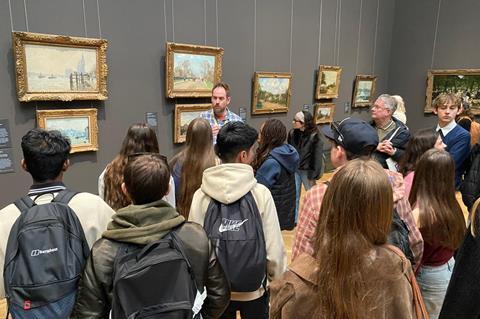
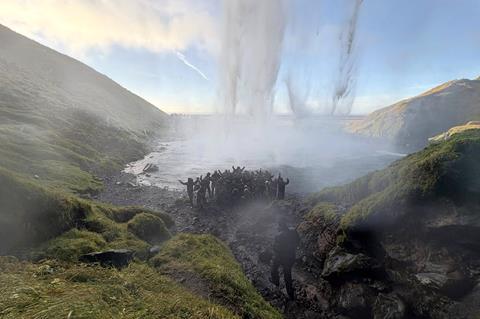
Each school organises an immersive programme of activities that they offer to other schools within their geographical hub. These comprise of academic, sporting and cultural activities such as media production in a film studio, paddle boarding and local performing arts showcases. Trust directors of subjects liaise and work with school subject leaders to organise joint school residentials and trips overseas to the likes of Iceland, Berlin and Paris.
“It’s not just about skills and knowledge. It’s about broadening experiences for the students, especially for those who are disadvantaged.”
What benefits does this model have?
Trips that perhaps one school would not be able to offer are made easier with two or more schools taking part. Not only is there a greater pool of students to draw from but also the experiences of staff can be shared which supports the itinerary and programme. For example, we had an art trip to Paris led by a very experienced trust director of art who took two inexperienced art teachers in their first year of teaching. They learnt about trip management and logistics as well as developing their own subject knowledge. This development of staff will benefit future trips and enhances the expertise and knowledge of a new generation of teachers.
Of course, joint trips also benefits children who interact together and through challenging activities develop deeper friendships. The trust annual trip to Aberdovey through the Outward Bound Trust is an example where teams of 12 are constructed mixing all 15 schools, including three special schools. In 2025 we took 156 students who completed the adventurous five-day residential. Not only did they learn leadership skills and tested their fortitude but they also they learned how to work as a team.

Why is learning outside the classroom so important to the Trust?
It’s not just about skills and knowledge. It’s about broadening experiences for the students, especially for those who are disadvantaged. There is a growing experiential gap between advantaged and disadvantaged students and trips, visits and activities that schools and the trust offers help close the gap. It builds relationships between staff and students and creates opportunities for all to excel. LOtC gives them a sense of achievement – you never know what that might lead to.
“Trust directors of subjects liaise and work with school subject leaders to organise joint school residentials and trips overseas to the likes of Iceland, Berlin and Paris.”
What are the challenges?
Funding is always a challenge but because Extending the Boundaries of Learning is a core value across the Trust and integrated into the curriculum, schools find a way to ensure children attend. The Trust also has its own charter for those in receipt of Pupil Premium funding and one element of this is to ensure a full range of experiences for those disadvantaged students which helps to close the gap.
What is your involvement with the Council for Learning Outside the Classroom?
We use the LOtC Mark’s criteria as a way to quality assure each school’s Extending the Boundaries of Learning curriculum. We also use the Mark as a way to bring staff together to share ideas, look at resources and programmes in each school.
We have 23 schools across the Trust currently holding either a Bronze, Sliver or Gold LOtC Mark and this year we intend to renew our applications across all schools.
What are your thoughts about LOtC still being seen by some as an ‘extra’?
In my experience almost all schools value LOtC. There is a thirst to develop programmes which encourage growth of character, skills and knowledge through LOtC activities and an understanding of the benefits from almost all school leaders. The challenges though are many and growing: cost of venues, transport, cover for staff and reliance upon the good will, often, of teachers to lead, manage and organise.
The need for schools to utilise their school grounds and the local learning area will become even more pressing and the recently published Curriculum Area Review where enrichment is positioned as integral to curriculum entitlement, and the forthcoming ‘Enrichment Framework’, may help schools better place LOtC activities at the centre of their curriculum.
For more information go to: meridiantrust.co.uk.
The interview with Martin Campbell was first published in the December 2025/January 2026 edition of School Travel Organiser magazine.