



Museums, science centres and other thrilling visits linked to Science, Technology, Engineering and Mathematics (STEM) to inspire young scientists.
1. National Science & Media Museum
Experiment with light and sound at the National Science & Media Museum in Bradford. Sschool groups from KS1+ can spend time in the permanent galleries and temporary exhibitions and watch live science shows during a visit.
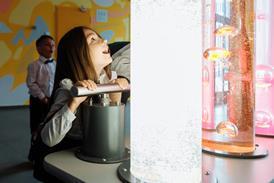
Wonderlab will take your learners on a fascinating journey through fun interactive exhibits where students will learn how light and sound are the building blocks of the technology they use every day.
Groups can also discover the history of photography - from the earliest cameras to the digital photographs of today in the museum’s Kodak Gallery, whilst a range of live learning shows take place during term time and focus on topics including light, sound and space.
2. Magna Science Adventure Centre
Housed in a former steelworks, the Magna Science Adventure Centre in Rotherham is a hands-on experience like no other. Four pavilions explore Air, Earth, Fire and Water through spectacular demonstrations suitable for KS1 - 3 pupils.
You can maximise your visit to the venue with a session in the new Newton Room where students work together as scientists and engineers to carry out an air rescue mission, calculating their flight plan and flying a simulator.
Workshops include Magic Materials, looking at what everyday materials are made of and their surprising properties; Volcanoes and Rocks, exploring how volcanoes lay down rock layers and identifying some common types of rocks; and Genes in a Bottle, where students extract DNA from their own cheek cells to watch them precipitate from solution as floating white strands.
3. International Centre for Life
The International Centre for Life in Newcastle welcomes school groups from Key Stage 1 to 4 for workshops and story-telling sessions. The venue offers lunch packages for pupils, storage for belongings and packed lunches and a coach drop-off area.
Workshops include identifying mystery powders, dissecting organs and discovering how forensic scientists analyse DNA found at crime scenes.
Within the wider museum, the Brain Zone explores senses, consciousness and learning, and features a real donated brain as well as 3D digital models from actual brain scans. While the seven-metre diameter Gaia installation, created from detailed NASA imagery, allows students to view our planet floating in three dimensions, connecting biology to environmental science and climate study.

4. Wellcome Collection
In London, the Wellcome Collection provides a thought-provoking take on medicine, biology, and what it means to be human in the 21st century. The Being Human exhibition reflects our hopes, and fears, about new forms of medical knowledge and our changing relationships with ourselves, each other and the world.
Students can explore genetics, minds and bodies, infection and environmental breakdown through the museum’s exhibitions and library. The galleries can accomodate up to 30 students at a time. Some exhibitions feature content that is unsuitable for younger pupils, including human remains, sexual content and graphic images of surgery.
5. The Observatory Science Centre
Boasting a mix of indoor and outdoor interactive exhibits, the Observatory Science Centre, Sussex welcomes all Key Stages for tailored curriculum support with workshops, telescope tours, and science shows adjusted for each individual group.
Workshops cover bridge building, understanding light, space, the sun and moon. The centre’s popular Robot Arms workshop, where pupils can control a robot arm to complete tasks using 3D shapes, introduces learners to some of the technology used in space.
Science shows are available for KS1-3 with themes linked to topics including motion, materials, sound and space. KS3/4 pupils and groups with an interest in physics, engineering and astronomy can book a telescope tour to incorporate additional telescope domes and areas.
6. National Space Centre
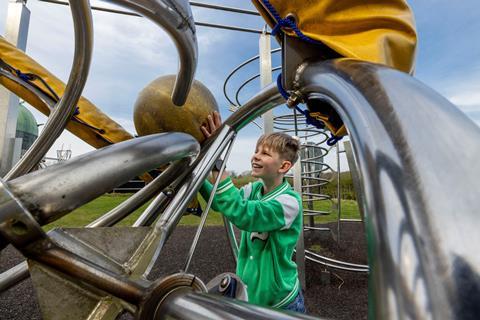
The National Space Centre in Leicester (pictured top) provides an immersive experience exploring forces, energy, and space science. The Rocket Tower displays genuine rockets up to 42m high, offering a vertical timeline of space exploration.
The planetarium’s shows transport students across the cosmos, while galleries look at satellite technology, the International Space Station, and current space missions. Workshops can be tailored, from rocket design challenges to investigating Mars exploration.
School groups can also sleepover in the galleries at the National Space Centre. The sleepover includes time to explore the galleries, a planetarium show, live experiment show, space-themed activites and a Tour Of The Night Sky in the Sir Patrick Moore Planetarium. Breakfast is provided the following morning.
7. Glasgow Science Centre
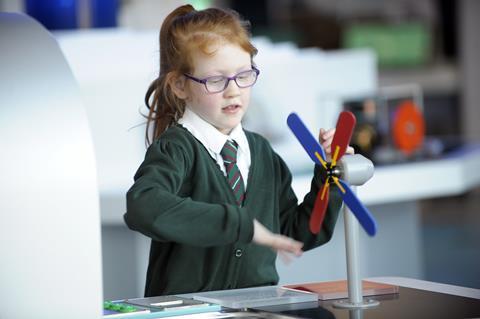
The Glasgow Science Centre aims to keep the liveliest minds engrossed and its Learning Lab STEM programme can supports teachers and inspire students through a range of learning experiences taking place over several weeks.
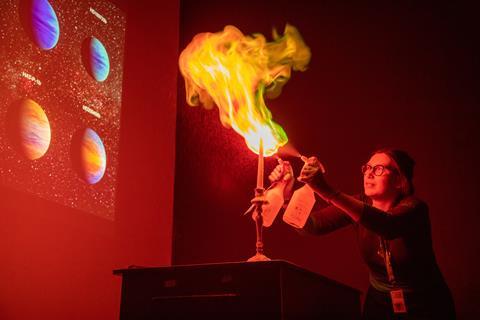
There are also live astronomer-led planetarium shows which are tailored for different ages. For example, primary pupils are invited to ‘stay up past their bedtime’ and explore a beautiful star-filled night, while older students can join the search for Earth-like exoplanets orbiting distant stars. The IMAX cinema shows educational science-led films on topics including the animal kingdom, the human body and fungi.
Visits are available Wednesday to Friday from September to December, February and March, and Monday to Friday from April to June.