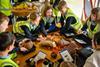





The Education Endowment Foundation (EEF) funded trial will look at the impact of outdoor learning on secondary school pupils.
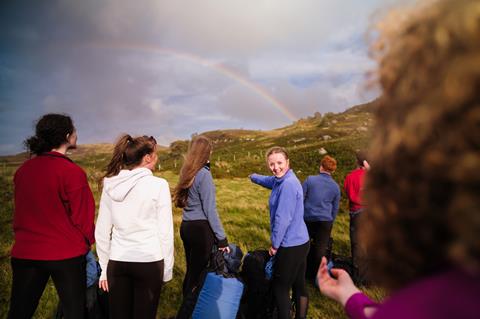
Commissioned by the EEF and led by the University of York, the independent evaluation will assess The Outward Bound Trust’s Adventure and Challenge Programme across 66 state-funded secondary schools in England.
The study will examine whether participation improves self-regulation, resilience, wellbeing and learning among 24 pupils from each of the participating schools who will be in Year 9 during the 2026/27 academic year. Findings from the evaluation will be published as an independent report and made freely available.
“We see, every day, what happens when a young person is trusted with real challenge, real responsibility and the chance to reset away from everyday pressures.”
Martin Davidson, chief executive, The Outward Bound Trust
A total of 1,584 pupils will be selected based on academic underperformance in English or maths, plus additional factors such as behavioural concerns, attendance or wellbeing challenges including low confidence. Priority will be given to schools where more than 24% of pupils are eligible for free school meals.
The study is currently looking for state-funded secondary schools in England to take part. They must have more than 24 Year 8 pupils in 2025/26, that have not taken part in Outward Bound Trust residential activities in the past two academic years (2024/25 and 2025/26), and have not taken part in whole-school programmes run by Commando Joe’s since 2024/25.
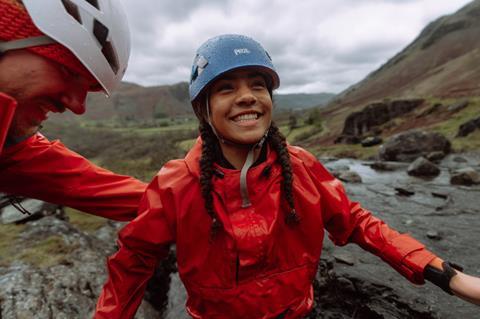
Martin Davidson, chief executive of The Outward Bound Trust, said: “We’re after mountains of evidence, not just good intentions. We see, every day, what happens when a young person is trusted with real challenge, real responsibility and the chance to reset away from everyday pressures.
“This EEF-funded trial is an opportunity to test adventure learning properly and share what we find. If it helps pupils build the self-regulation, resilience and wellbeing they need to re-engage with school, that’s knowledge schools and policy-makers can act on.”
What will the trial involve?
All participating schools will support evaluation activities including online pupil questionnaires at key points between May/June 2026 and October 2027, with some schools also taking part in focus groups or pupil interviews.
Half of the schools will be randomly allocated to the intervention group and will attend a five-day residential programme at an Outward Bound centre during the academic year 2026–2027, accompanied by two members of school staff. The residential will include physical challenges, teamwork activities, reflection sessions and guided goal-setting, with structured prep and follow-up sessions delivered in school.
The other half of schools will be the control group and will not attend a residential, but will complete the evaluation activities so outcomes can be compared.
Schools involved with the study will be asked not to take part in additional adventure learning activities with the pupils until after they complete their GCSEs in 2029. This is to protect the integrity of the study.
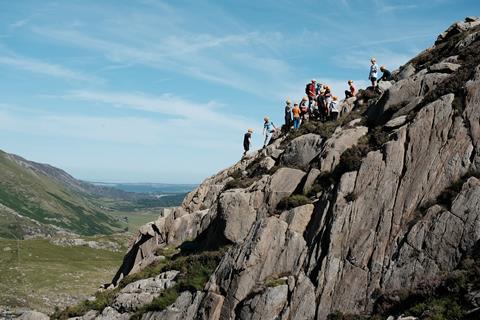
Funding to support participation
The trial is part-funded so that schools taking part will receive support.
Schools in the intervention groups will receive the residential programme at a heavily subsidised rate, with EEF and The Outward Bound trust funding 83%. A travel support bursary of up to £114 per pupil will also be available.
Control schools will receive a £1,500 payment to support their participation in evaluation activities and pupil development. The funding will be paid in instalments linked to key milestones.
Schools interested in being part of the trial, or looking to find out more can register their interest at: www.outwardbound.org.uk/eefresearch.