



Constantinople to Istanbul: One City, Two Empires will chart 1,600 years of art and design that traces the change of empires in one of the world’s most influential cities.
The exhibition is a first in the UK and will offer a new perspective on a city shaped and documented by artists across more than a millennium. It opens at the V&A South Kensington on 7th November and will run until 9th May 2027. Tickets will be available to book soon.
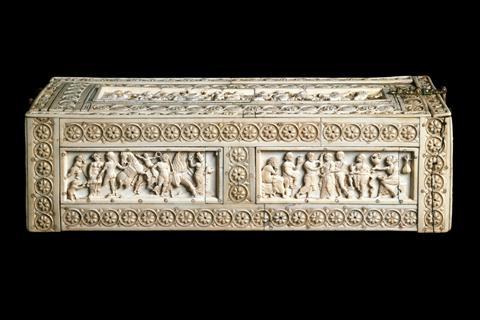
Constantinople to Istanbul: One City, Two Empires will feature over 200 artefacts, artworks and architectural design dating from AD 330 to 1922. Among the items on display will be rarely seen decorative arts including fine silks, mosaics, jewellery, sculpture and paintings.
The city of Constantinople, now called Istanbul, was the imperial and religious capital at the heart of two successive empires: the Byzantine (AD 330 - 1453) and the Ottoman (1453 - 1922), and the exhibition will explore their distinct yet connected traditions of art and design, built across 16 centuries.
School groups will learn about the changes in patronage and production that reflect the ups and downs of the city’s history, and the lasting impact its creative output had in the Christian and Islamic worlds.
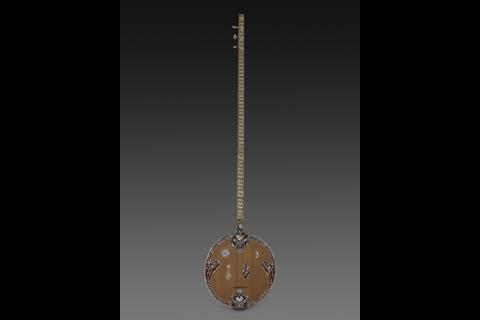
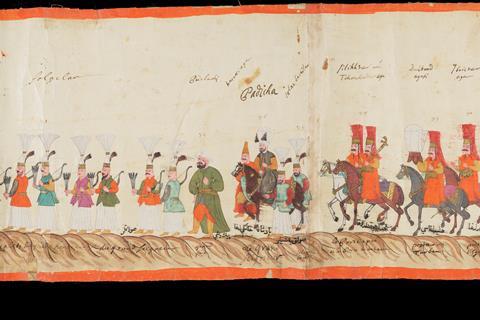
Many items will be on display in the UK for the first time. Highlights will include an Ottoman processional scroll from the 17th century, a unique Portrait of Sultan Mehmed II, painted in 1479 by Venetian artist Gentile Bellini, and a long-necked lute (tanbur) dated around 1750.
A fascinating history
To break down the impact and influence of two empires over 16 centuries, Constantinople to Istanbul will be divided into four themed sections:
- Grand Beginnings: explore Constantinople’s refounding in AD 330 as the capital of a unified Roman Empire under Constantine the Great. Pupils will learn about the city’s strategic location, infrastructure, advanced water system and the introduction of the Hippodrome.
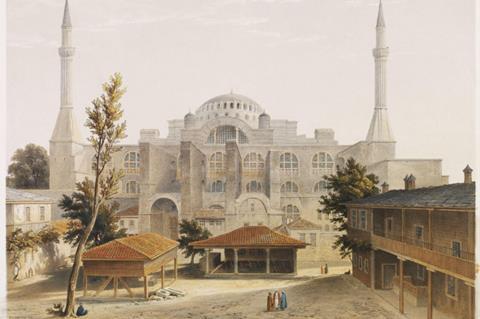
- Heaven and Earth: discover how art and architecture were used in Christianity and how Byzantine emperors adopted sacred imagery to project power and authority. Learn about the sixth century Hagia Sophia, still one of the most important buildings in the world.
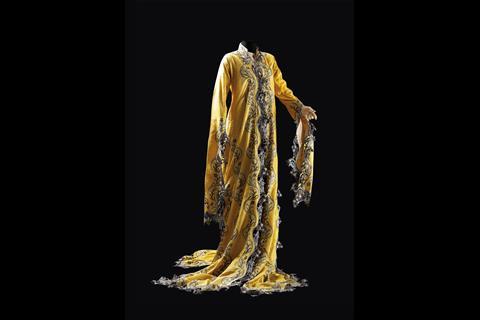
- Power and Reach: examine how the Ottoman court projected authority in peace and war through visual spectacle. See how luxury materials, such as silk and gold, were used in public processions to shape imperial identity.
- Life in the City: explore the city as a cosmopolitan centre of diverse languages, faiths and artistic traditions. Pupils will learn about religious coexistence, everyday urban life over time, and shifting tastes in the 19th century.
The exhibition concludes with a look at how Byzantine and Ottoman art influenced 19th century Europe, including work by Owen Jones and William Morris.
Tim Stanley, curator of Constantinople to Istanbul, said: “Creating this exhibition has been an exciting adventure, bringing together two worlds that are usually kept well apart – the Byzantines and the Ottomans.
“Their capital – known first as Constantinople and then as Istanbul – was and is one of the greatest cities in the world, and the artistic ideas generated there in its double history as an imperial capital still play a major role in the world.
“By combining the stories of these two empires and the amazing art they both produced, we have been able to release the stories of Constantinople and Istanbul from their separate boxes and let them enjoy the limelight together.”
School visits to the V&A South Kensington
School groups are welcome to book self-guided visits which includes access to the free exhibitions and some ticketed exhibits, including Constantinople to Istanbul (once tickets are released).
Workshops are offered for all key stages, led by museum learning facilitators. The sessions are designed to build confidence through creative activities that link to the object and themes on display in the V&A galleries.
SEND classes can book workshop sessions that are multi-sensory and tailored to the needs of individual groups.
For more information about school visits at V&A galleries, go to: vam.ac.uk/info/schools.