




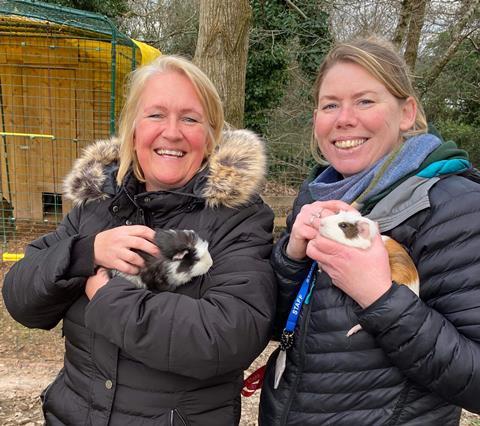
Head teacher Jennie Harvey and outdoor learning lead Clare Feehan from Lampard Community School reflect on their LOtC journey.
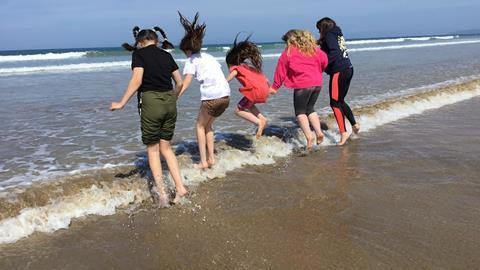
Lampard Community School is a special school in Barnstaple, North Devon, with children aged 5-16 who have complex learning difficulties. They were awarded the Silver Learning Outside the Classroom LOtC Mark (by the Council for Learning Outside the Classroom) in 2024 and in September 2025, were given the Gold Mark.
Tell us about the school’s learning outside the classroom (LOtC) journey
Jennie: Post-Covid we really focused on building back children’s access to a wider curriculum offer. It has been about really getting to know our students and their aspirations and then thinking how we could build a curriculum around outdoor learning that would help to meet those.
What is the school’s emphasis on LOtC now?
Clare: Staff are really on board with it because they can see the benefits. Each curriculum coordinator has thought about how they can include LOtC in the three-year plan that we have.
Jennie: When I’m recruiting now, I look for staff who also share the focus and understanding of learning outside the classroom. We have really honed in on our approach in recent years to ensure LOtC is strategic. Experiences aren’t ad-hoc but thoroughly planned and linked to the needs of our students.
What impact have you noticed on staff and students?
Jennie: Everyone’s well-being is looked after a bit more because there are opportunities to not be constrained by four walls all of the time. We involve students and staff and get their feedback in how we develop the LOtC offer.
Clare: Attendance and behaviour has improved as a result of getting the students learning outside the classroom more. There has been a positive effect on everyone.
What advice would you give to other schools about how to embed learning from these experiences?
Clare: The enrichment map that we produced, as a result of doing the Silver Mark with CLOtC was really helpful. By mapping out each curriculum area we could see exactly what each subject was offering to make sure there weren’t overlaps. Doing that with the whole staff team was really helpful.
We also did a lot of research on other schools that had the LOtC Mark and looked at how we could learn from them.
Jennie: You have to bring staff along with you on the journey and be really clear on your intent behind it asking what’s the purpose? What do we hope to achieve by mapping out enrichment and learning outside the classroom? What do we hope the staff and children will get out of it?
It’s about taking a strategic approach and having a really clear intent – that all children get to do something different.
How did you find the LOtC Mark experience?
Clare: We knew we were doing quite a bit already but by doing the LOtC Mark it really helped us see what we were doing and for people to recognise that. It was good to present our progress to governors to show them what we were offering.
Jennie: Getting to Gold has really helped focus everybody across the school. I would really recommend other schools get involved with the CLOtC.
What’s next?
Clare: Our CLOtC assessor gave us some points to work towards including having more student and parent voices.
Jennie: There’s always more to do and we’ve got to sustain it now. We are going to be reflecting and getting feedback on opportunities that we’re offering. We are taking some bold steps, for example investing in some VR headsets, so we’ll be using those before we take the students somewhere, if autism is a barrier.
As change is such a barrier to access, we do pre-visits where we can, or staff will go and take lots of photos of where we’re going but if the students can experience somewhere in 3D, it’ll hopefully give them more confidence and we’ll see less anxiety and hesitation.
We’re keen on using them for residentials. We use the Calvert Trust and St George’s House which are both fantastic – we do day visits before residentials but if we can do the virtual experience before a day visit, that’ll hopefully make them more successful.
Why is learning outside the classroom so important to your school?
Jennie: Our children are vulnerable in lots of different ways and because of the way they present, with high levels of autism, their lives are very small. They tend to be home-based so we’re aspirational for them to live the best quality of life that they can – they need to know what’s out there.
I feel that a lot of school trips are based on your parents’ income and I’ve always felt really strongly that that should not be how enrichment works. It’s the poorest children who have the least opportunities outside of school so they should have equal opportunity to go on every trip – that’s what drives us.
Clare: While the children are here, we want them to be able to experience as much as we can offer so that they’ve always got those memories and those experiences. Hopefully as they grow older and become more independent they can then feel confident to do more themselves.
Would you like to tell us about the work you do in organising educational visits? Get in touch by emailing editorial@schooltravelorganiser.com.