




Jo Harris, education manager at Field Studies Council discusses why outdoor residential trips are the perfect way to deliver the new enrichment framework.
The Department for Education’s new Enrichment Framework marks a significant shift in how schools plan, deliver and evaluate enrichment.
For the first time, leaders have a clear set of national benchmarks that define what high quality enrichment looks like – and a strong message that enrichment is not an optional extra but a strategic, measurable part of every young person’s education.
Outdoor learning and residential experiences are uniquely placed to help schools meet every benchmark.
Residentials are explicitly recognised as high value enrichment within the Nature, Outdoors and Adventure category, with schools encouraged to offer outdoor learning, sustainability activities, camps and residential experiences.
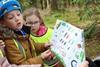
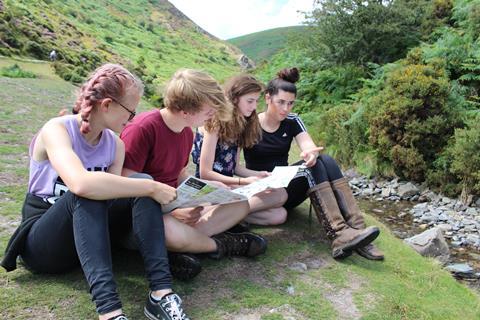
Whether students are conducting ecological fieldwork, exploring climate education or developing teamwork through outdoor challenges, they are simultaneously building confidence, resilience and independence – all outcomes the framework asks schools to evidence.
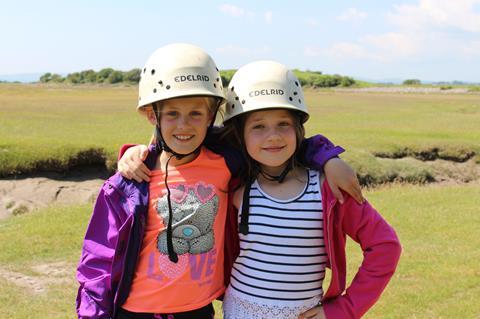
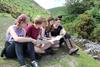
Belonging is another major theme. The framework encourages schools to use enrichment to strengthen relationships, social development and engagement. Residentials achieve this in a way few other interventions can. Shared accommodation, communal meals and collaborative problem solving dissolve social barriers and help students form new connections.
As our previous work highlights, ‘quiet students find their voice’ during residential experiences and staff gain deeper insight into learners’ strengths and potential.
Accessibility is also central. Benchmark 5 emphasises ensuring enrichment is inclusive for disadvantaged pupils and those with SEND. At Field Studies Council, programmes are continually adapted to remove barriers and support diverse needs, with many SEND and ASN groups finding that residentials offer transformational experiences that would otherwise be out of reach.
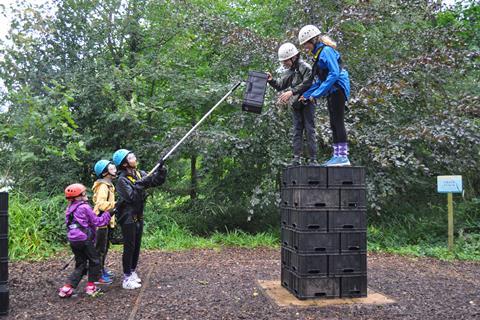
The framework encourages schools to work with external partners. Benchmark 6 explicitly highlights the value of specialist organisations such as outdoor education centres. Schools cannot be expected to hold expertise in environmental science, sustainability education, adventure learning and residential logistics in house. Partnerships allow them to deliver high quality, curriculum aligned enrichment with measurable impact.
In fact, good residentials – particularly based around outdoor learning – deliver impact right across the board, whether that be curriculum enrichment, environmental education, personal development, social connection, wellbeing or memorable life experiences.
Residential outdoor learning is more than a trip. It is one of the most powerful ways in which schools can deliver – and evidence – meaningful enrichment across every benchmark.
For more information on the Field Studies Council, click here.