


Samantha Budds, head of vocational faculty at Diss High School in Norfolk tells us about taking Key Stage 5 pupils on a trip of a lifetime to New York.
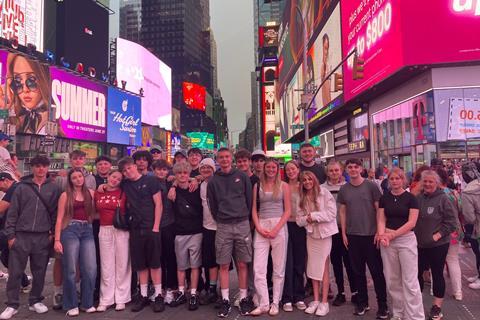
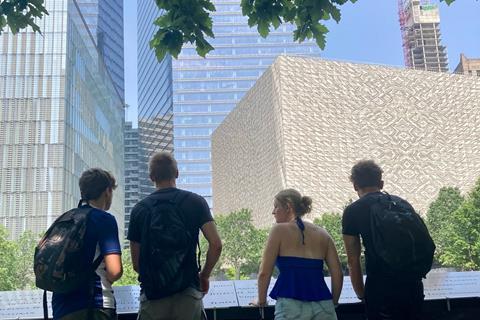
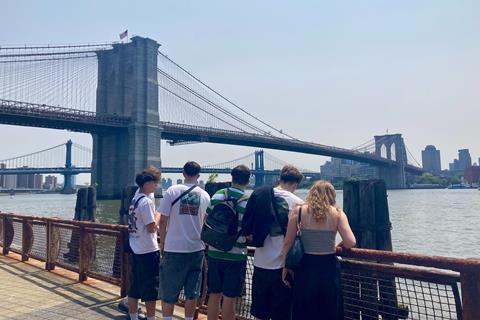
During the visit we went to the following places: Wall Street and Financial District on a walking tour, Brooklyn Bridge and Dumbo area in Brooklyn, Hershey’s Chocolate World Business tour, Empire State Building, Central Park, 9/11 Memorial, Times Square, Grand Central Station, Macy’s Business tour, Rockefeller Centre, The High Line and Staten Island ferry.
This particular year group had been impacted significantly by the pandemic. Added to this, our school is located in an area of social deprivation which is also very rural. Many of our students rarely leave the county let alone travel further afield or abroad. We decided that we wanted to give them the opportunity to not only travel abroad but to visit somewhere that would have a lasting impression upon them and open their eyes to the opportunities beyond our small town.
School: Diss High School, Norfolk
Subject: Business, Travel and Tourism
KS: 5
Number of pupils: 23
Funding to ensure fairer opportunities
We knew that such a trip may well be prohibitive for some of our students due to the cost and we traditionally have a very low number of students who apply for the bursary which is available to KS5 students even though many are eligible. With this in mind, we decided to apply to the Turing Scheme to help fund the trip. Our bid for this funding was successful which meant we were then able to offer the visit at a greatly reduced price.
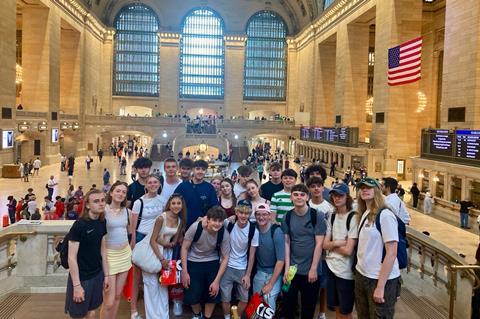
We also considered the students in our cohort. Not only had they all been impacted by Covid, we had students who had overcome health challenges and several who had never left the UK before. The other point that we considered is that many of our students have low aspirations and don’t apply for higher education or don’t leave our immediate geographical area when they are looking for jobs / apprenticeships. We felt that if we could offer them something extraordinary it might help them to see what was possible.
“The New York trip was definitely something out of my comfort zone but in the end I’m glad I went, even if it was challenging at times because it was my first time flying and travelling outside of the UK.”
Pupil comments
By running the trip at the beginning of June, cover was minimal as staff had been freed up with exam classes leaving. Payments were spread over the course of about eight months and this helped our families as well.
New York had lots to offer
Our learning objectives were two-fold. There were specific links to our curriculum areas of business and travel and tourism. In business, we cover many financial aspects so visiting Wall Street and the Financial District was very important to us.
“The knowledge I gained and the connections I made will stay with me and continue to influence my academic interests, career ambitions, and personal relationships well into the future. It was truly a once-in-a-lifetime experience.”
Pupil comments
We also wanted to build links to specific businesses. This was done through the talks we had at Hershey’s and Macys. Other objectives revolved around personal development, learning to be independent, communication skills and resilience.
A lasting impact
We saw how much this trip impacted our students. In lessons, students working on a piece of business coursework where they were investigating entrepreneurship used Milton Hershey as an example and drew on information from our talk and visit to Hershey’s World while in New York. This resulted in work which was far better researched and drew on personal anecdotes rather than being reliant on just internet data.
Wider aspirations: the students who went on the trip have now finished Year 13. Several of them have opted for gap years before going to university because they want to do more travel. They would never have chosen this option if they had not gone on the trip. Others have either applied to universities further away from home as they now feel more confident or have applied to more aspirational apprenticeships.
Both parents and students have talked about their wider aspirations and how it has shown them what is possible. They have greater independence and are more resilient to change; they’re open to new ideas and new ways of doing things.